Why I asked
My younger brother picks up complicated video games quickly and checks out of traditional lessons just as quickly. Games are clearly good at teaching something. A lot of gamified education copies the surface of games, points and badges and leaderboards, instead of the part that actually works, which is how a good game teaches you to play it.
Game design writing tends to praise two things: implicit tutorials, where you learn by doing instead of reading text boxes, and adaptive difficulty, where the game adjusts to how you're doing. I wanted to know if that holds when the goal is learning, not just fun.
The study
A 3×2 between-subjects design, so each player saw exactly one combination:
- Implicitness. Low: written instructions and immediate feedback. Moderate: guidance partly built into the mechanics, less feedback. High: no explicit instruction at all.
- Adaptability. Either fixed difficulty, or a game that adjusted enemy difficulty, jump intensity, and scoring thresholds in real time based on how you did on the previous level.
I built a 7-level 2D platformer in HTML, CSS, and JavaScript for it, logging every death, button press, star, and second of play. 115 students were sampled; after consent and eligibility, 90 high schoolers aged 14 to 18 were randomly assigned to one of the six versions and answered a 10-item survey afterward. I merged the gameplay logs and survey responses with a Java program, then analyzed them in R: one-way ANOVAs, Welch t-tests, chi-square tests for completion, and two-way ANOVAs for interactions.
What I found
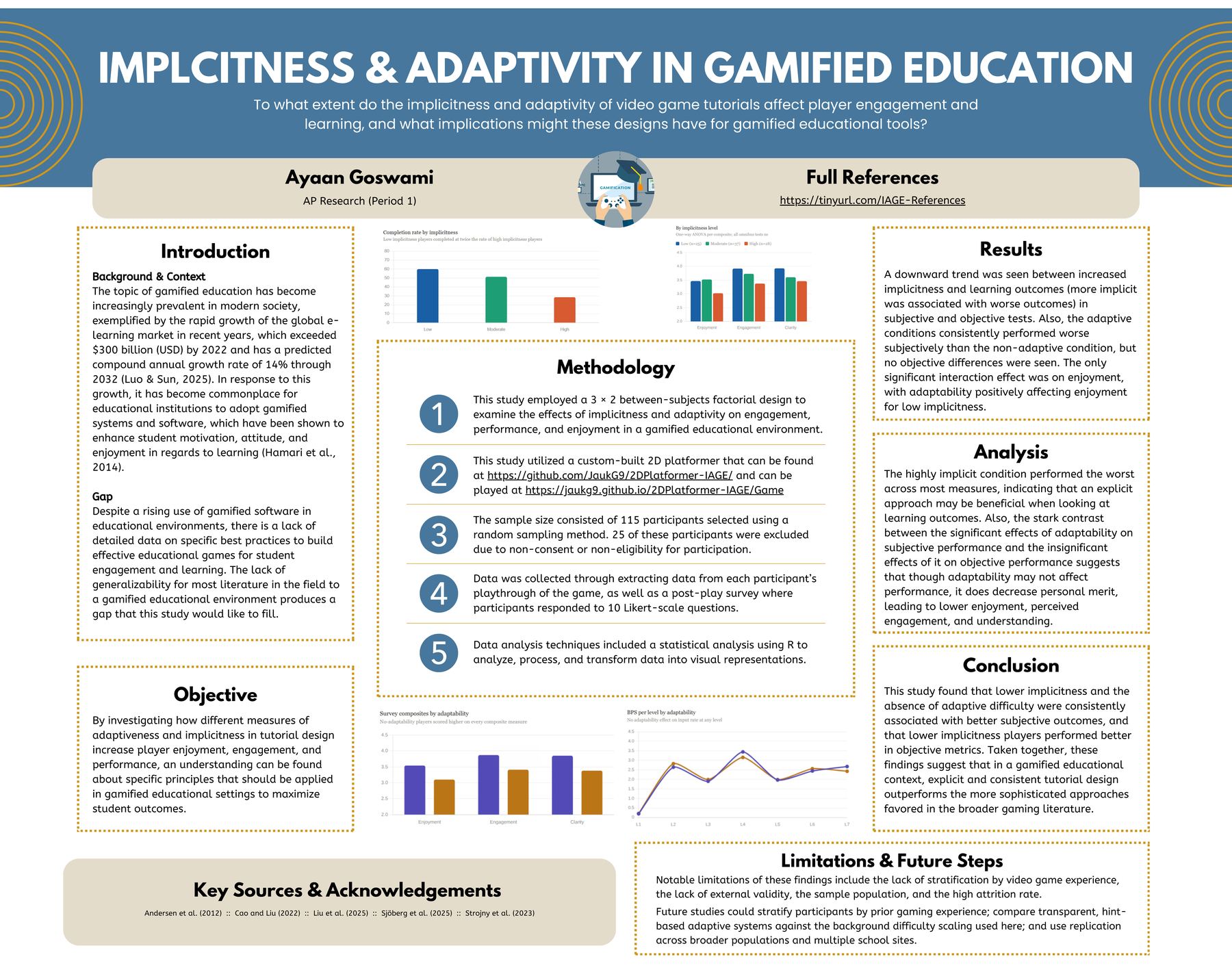
Fig. 1. Finished all 7 levels, by how much the tutorial explained
The explicit version won. Completion dropped as the tutorial got more implicit: 60%, then 51%, then 29%. Players who got low implicitness rated their engagement (p = 0.047) and how clear and well-scaffolded the levels felt (p = 0.029) higher than the high group, and they pressed significantly more buttons on the final, hardest level, which I read as persistence.
Adaptive difficulty didn't help either. Players in the adaptive versions rated engagement (p = 0.034) and scaffolding (p = 0.027) lower, and adaptivity didn't improve a single objective performance measure. The worst combination by far was high implicitness with adaptivity, where 2 of 12 players finished.
My best guess at why: when a game quietly adjusts itself behind your back, your progress stops feeling like yours. For learning, explicit and consistent beat clever.
Limits
I didn't stratify by prior gaming experience, the sample came from one school's gifted and talented population, and attrition was high. If I ran it again, I'd stratify by experience, compare transparent, hint-based adaptivity against the hidden difficulty scaling I used, and replicate across schools.